


Retiring Boomers Broke This Economic Relationship
Free Chart In Focus email
Delivered to you every week
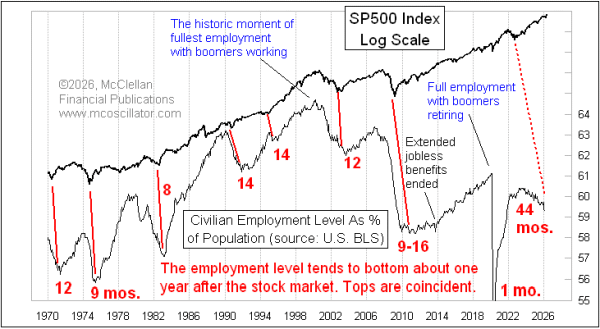
The employment level as a percentage of the US population continues to fall, even though the stock market has been rising. That breaks a longstanding relationship shown in this week's chart.
Normally the employment level as a percentage of the population bottoms about a year after an important stock market bottom. The last such price bottom was in September 2022, on a monthly basis. That should have meant a bottom for the employment/population ratio around September 2023. Instead it has kept falling.
The unemployment rate has done fine the whole time, ranging from the high 3s to the low 4s now. So it is not a problem so much of people not able to find work. Rather, you can blame the retiring Baby Boom generation who are deciding not to stay in the work force.
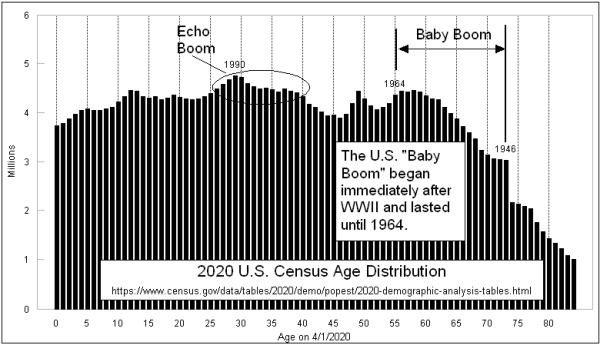
When World War 2 ended in August 1945, GIs came home, Rosie The Riveter gave up her factory job, and Americans got busy making babies, resulting in a big spike in births in 1946. That continued until 1964, which coincidentally was one year after Ortho Pharmaceuticals introduced the first oral birth control pill. As of the 2020 census, that 1946-64 birth year cohort totaled 73.5 million, or 22% of the total. Now those Boomers are 62 to 80 years old, so it is understandable that they would be leaving the work force. This effect is magnified because the 1946-64 Baby Boom generation has long been skewed to the more recent birth years, with 1960 being the peak birth year for the Boomers. That 1960 cohort reaches "full retirement age" for Social Security at 66 years and 10 months, so more of them will soon be checking out of the work force. Those who were born before 1960 have already been doing that, which is why we see the employment to population ratio falling in the first chart.
Much has already been written about how supporting these pensioners who are leaving the work force is going to create great strain on the economy, and the federal budget. I won't belabor that here, but I will point out that we will get to repeat all of this again 30 years later when the "echo boom" generation of the kids of Baby Boomers will be reaching their retirement age. They peaked births in 1990.
Why this matters for stock market investors is that the Baby Boomers who are retiring are going to start drawing down their investment holdings at a greater rate, to support their preferred lifestyles in retirement. That has not been much of a problem thus far, with the Fed now doing QE5 and keeping the stock market up. Appreciation of stock prices has helped soften the effects of the selling of stocks that Boomers may have been doing. A meaningful stock market downturn into the teeth of this demographic bulge would mean drawing down retirement accounts' stock holdings even more.
That is not an insight one can trade on. It is just important background information about what challenges lie ahead.
Tom McClellan
Editor, The McClellan Market Report
Aug 25, 2016
Echo Boomers Will Fire Up Housing Market |
Apr 23, 2010
Home Prices and the Birth Rate |
Feb 12, 2010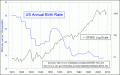
Birth Rate and the Stock Market |