


UMich Consumer Confidence is Low, Which is Bullish
Free Chart In Focus email
Delivered to you every week
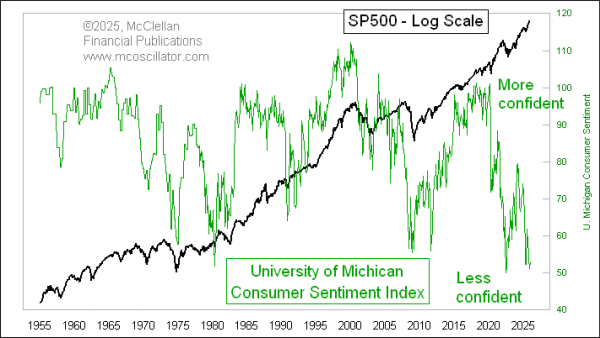
The University of Michigan has been conducting its "Survey Of Consumers" since 1955. The recent data have been among the lowest of their published readings, meaning that survey respondents are not feeling all that great about the supposed 4.3% rate of US GDP growth. Perhaps people are more attuned to indications like manufacturing employment being in a decline since May 2024. And thus far, the low gasoline prices have not gotten any traction in the hearts of consumers.
Lows in consumer sentiment measures tend to be bad for whoever is in the White House, and to some extent this applies to Congress as well. The UMich survey data reached what was then an all-time low in 1980, which doomed Jimmy Carter's reelection chances and led to Ronald Reagan's victory. A similar low reading in 2008 saw a change from Republican control under Bush 43 to President Obama in a decisive popular vote and electoral college victory. There was another very low reading in 2022, which led to a change in Congress, and eventually to Donald Trump winning another term in 2024, even though the survey numbers had recovered some by the time of that election.
So the Republicans currently in control of the White House and both houses of Congress will want to see these consumer sentiment numbers start to rebound. That is the point for politicians to worry about.
The point for investors to worry about is that as consumer confidence numbers start to rebound from very low levels like this, it tends to be extremely bullish for the stock market. Usually that rebound occurs from a simultaneous low in stock prices along with the consumer sentiment data. It is a rather unusual condition to see extremely low survey readings like this happening with stock prices at new all-time highs.
Part of the reason why low consumer sentiment are bullish is that such readings usually arise from a condition of seeing a bad economy, which the Federal Reserve then steps in to do something about. We have had 3 rate cuts in 2025, and now the Fed has started up QE5 (although they are not calling it that yet). Those are bullish conditions for both the stock market and the actual economy. It should lead to a rebound in the consumer confidence data, and that should help keep the bull market going.
Tom McClellan
Editor, The McClellan Market Report
Aug 10, 2023
DJIA/Gold Ratio vs. Consumer Sentiment |
May 22, 2025
Gold and Consumer Sentiment Extremes |
Mar 14, 2019
Price = Sentiment |